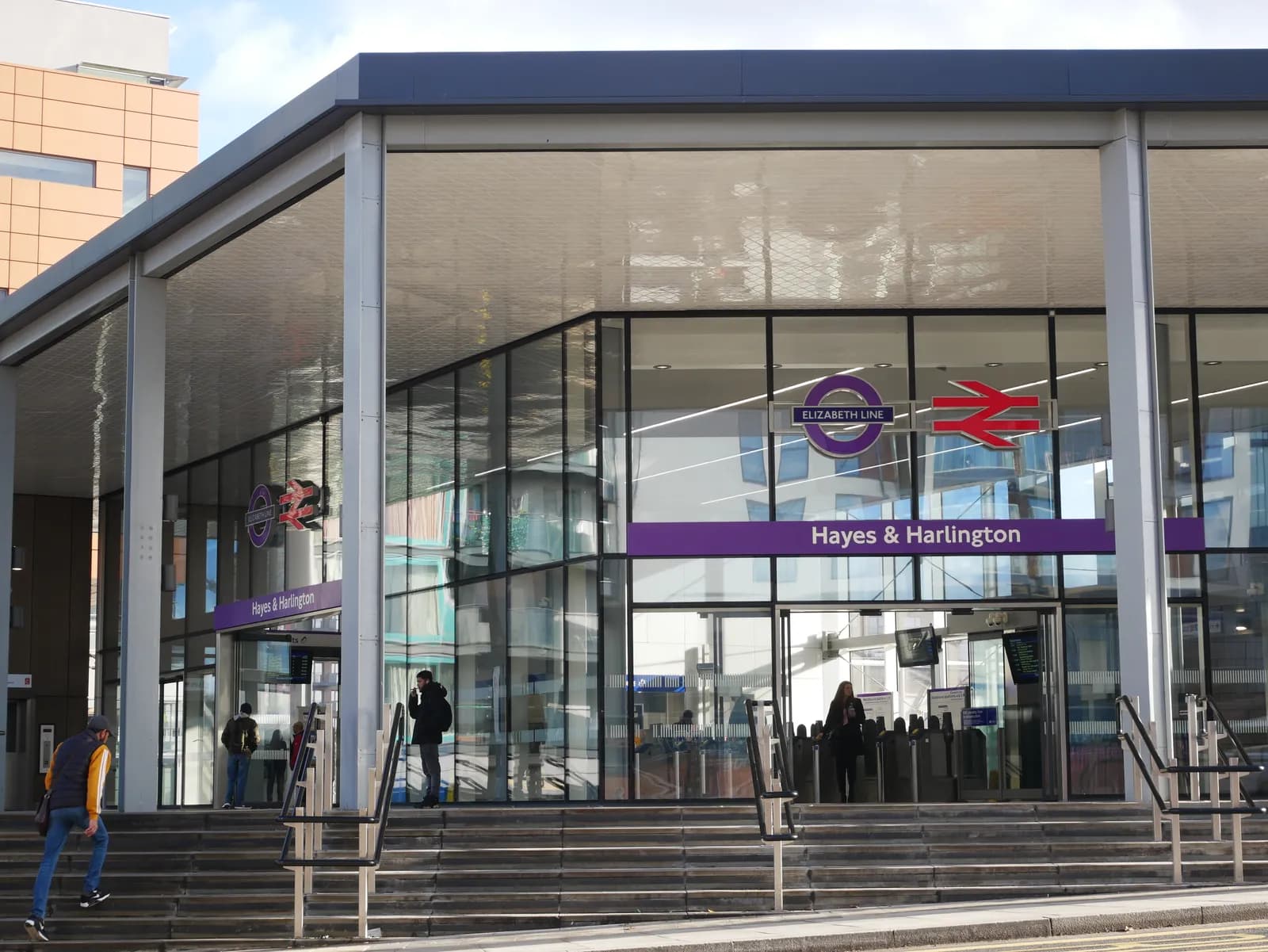
The Elizabeth line serves as a vital transport link for residents in the southern part of the London Borough of Hillingdon, providing direct rail connections from Hayes, Harlington, and West Drayton into central London and beyond.
The Route Through Hillingdon
The Elizabeth line passes through the south-western corner of Hillingdon, stopping at Hayes and Harlington station and West Drayton station. These stations sit on the Great Western Main Line, a railway corridor that has connected London to the west of England since the nineteenth century. The Elizabeth line services use this existing infrastructure while offering upgraded stations and more frequent trains.
Hayes and Harlington station sits at the centre of a densely populated area. The station serves not only Hayes itself but also the neighbouring community of Harlington, which lies within the London Borough of Hillingdon. West Drayton station, further west, connects a residential area that has seen significant housing development in recent years.
What the Service Offers
Elizabeth line trains run from Reading and Heathrow Airport in the west through central London to Abbey Wood and Shenfield in the east. For Hillingdon residents, this means direct services to central London stations including Tottenham Court Road, Liverpool Street, and Canary Wharf without the need to change trains.
The service operates with the distinctive purple-coloured trains that characterise the Elizabeth line. These trains offer walk-through carriages, air conditioning, and dedicated spaces for wheelchair users and bicycles. Station facilities at Hayes and Harlington and West Drayton received upgrades as part of the Elizabeth line construction programme, including new ticket halls and improved passenger information systems.
Local Impact
The Elizabeth line has altered travel patterns for residents in south Hillingdon. Commuters who previously relied on the Piccadilly line from Uxbridge or buses to reach central London now have an alternative rail option. The service also provides connections to Heathrow Airport, which employs significant numbers of Hillingdon residents.
West Drayton has experienced particular change. The area around the station has seen residential development, with new housing built to capitalise on improved transport links. This development has brought both new residents and new pressures on local services and infrastructure.
Connections to the Wider Network
Both Hayes and Harlington and West Drayton stations offer interchange with local bus services operated by Transport for London. These buses connect the stations to surrounding neighbourhoods that lie beyond walking distance of the railway.
The Elizabeth line also connects at various points with the London Underground network, allowing passengers to reach destinations not served directly by the line. For Hillingdon residents travelling north to Ruislip or Uxbridge, or south to Hounslow, the Elizabeth line forms one part of a multi-stage journey.
Ongoing Considerations
As with any major transport infrastructure, the Elizabeth line brings both benefits and challenges to the areas it serves. The improved connectivity supports local economies and provides residents with greater choice in how they travel. At the same time, increased passenger numbers place demands on station facilities and surrounding transport networks.
Hillingdon Council and Transport for London continue to monitor the impact of the Elizabeth line on local communities. Issues such as station parking, pedestrian access, and bus service coordination remain relevant to residents using these stations regularly.
For south Hillingdon, the Elizabeth line represents a significant piece of transport infrastructure that shapes how residents work, travel, and access services across London and beyond.