John Stears was born on 25 August 1934 in Uxbridge, Middlesex, and grew up in nearby Ickenham. He would become one of the most influential special effects artists in cinema history, earning two Academy Awards and earning nicknames including "the Dean of Special Effects" and "the Real Q".
Early Years in Hillingdon
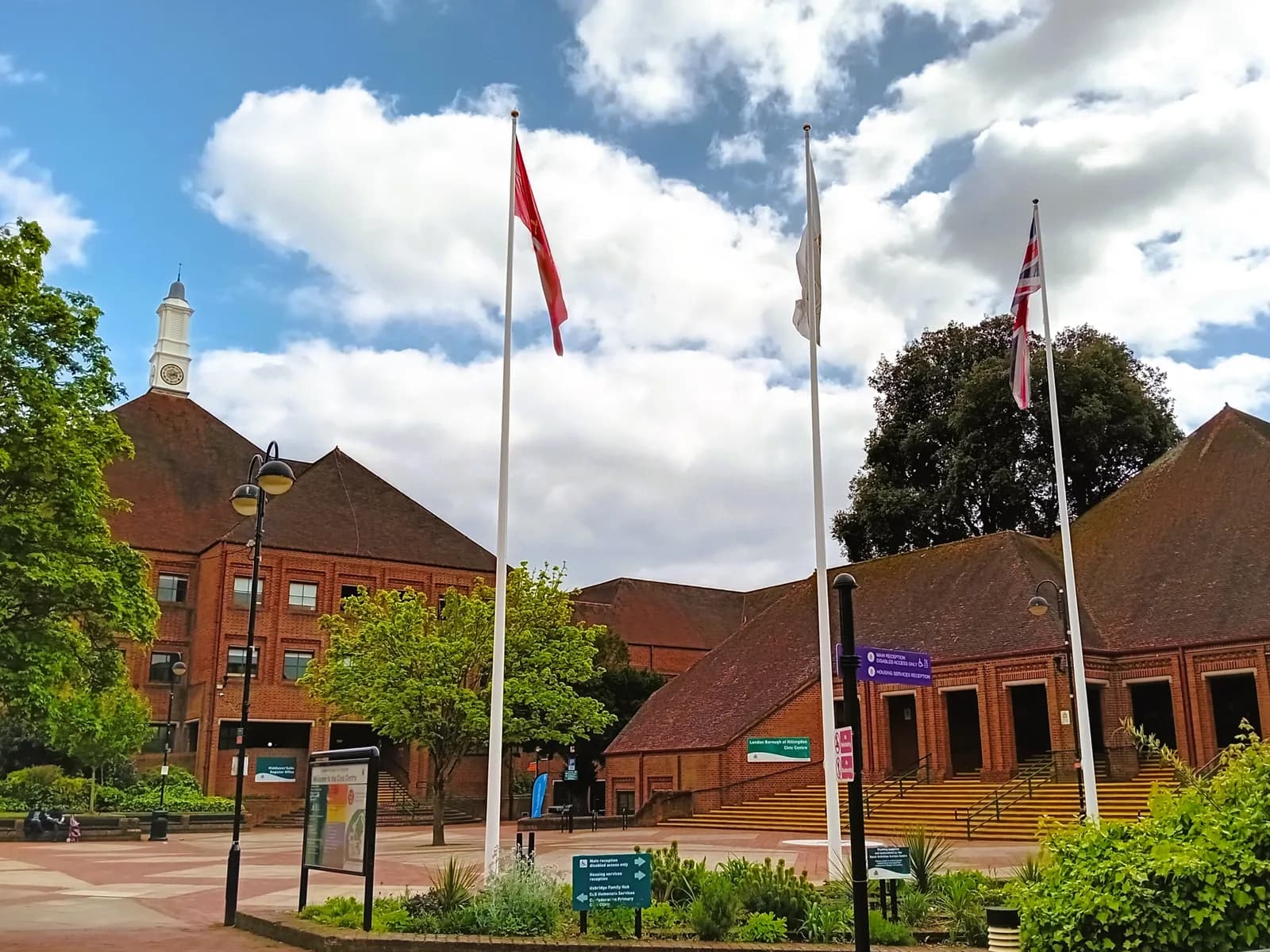
Stears spent his formative years in the area that is now the London Borough of Hillingdon. He was born in Uxbridge and raised in Ickenham, which forms the northern part of Uxbridge. His education took him to Harrow College of Art and Southall Technical School, both within the wider Hillingdon area, where he developed the technical skills that would define his career.
Before entering the film industry, Stears worked as a draughtsman with the Air Ministry and served as a dispatch rider during his National Service. He then joined an architectural firm, where he built scale models of building projects. This model-making expertise proved to be the foundation of his future success.
The Road to Pinewood
Stears' talent for creating detailed mechanical models eventually led him to the Rank Organisation, where he began his film career. His breakthrough came when he joined the special effects team at Pinewood Studios, working on the burgeoning James Bond franchise.
His first Bond film was Dr. No (1962), where he created the explosive destruction of the villain's Jamaican hideout. This marked the beginning of a long association with the series that would cement his reputation as British cinema's premier gadget master.
The Real Q: James Bond's Gadget Genius
Stears earned the nickname "the Real Q" for his work on James Bond's most iconic vehicle. For Goldfinger (1964), he fitted the Aston Martin DB5 with an array of gadgets that have become synonymous with the franchise: bullet-proof windows, revolving licence plates, forward-firing machine guns, a rear oil-slick dispenser, and the legendary passenger-side ejector seat.
To make the car, Stears persuaded Aston Martin to provide a prototype DB5 before its commercial release. The resulting vehicle became one of the most famous cars in film history. Stears later expressed disappointment when the Bond films switched to BMW vehicles in the 1990s, maintaining that 007 should always drive an Aston Martin.
His Bond work continued with From Russia with Love (1963), Thunderball (1965), for which he won his first Academy Award for Best Visual Effects, You Only Live Twice (1967), On Her Majesty's Secret Service (1969), where he created the avalanche sequence, and The Man with the Golden Gun (1974), featuring his flying cars.
Chitty Chitty Bang Bang
Between Bond assignments, Stears built another beloved cinematic vehicle. For Chitty Chitty Bang Bang (1968), he constructed the whimsical flying car that transformed from an old racing car. The film allowed him to showcase his ability to create fantastical yet mechanically plausible contraptions.
A Galaxy Far, Far Away
Stears' most famous creations came in 1977 when he joined the production of Star Wars. George Lucas hired him to realise the robots, vehicles, and weapons that would become cultural icons.
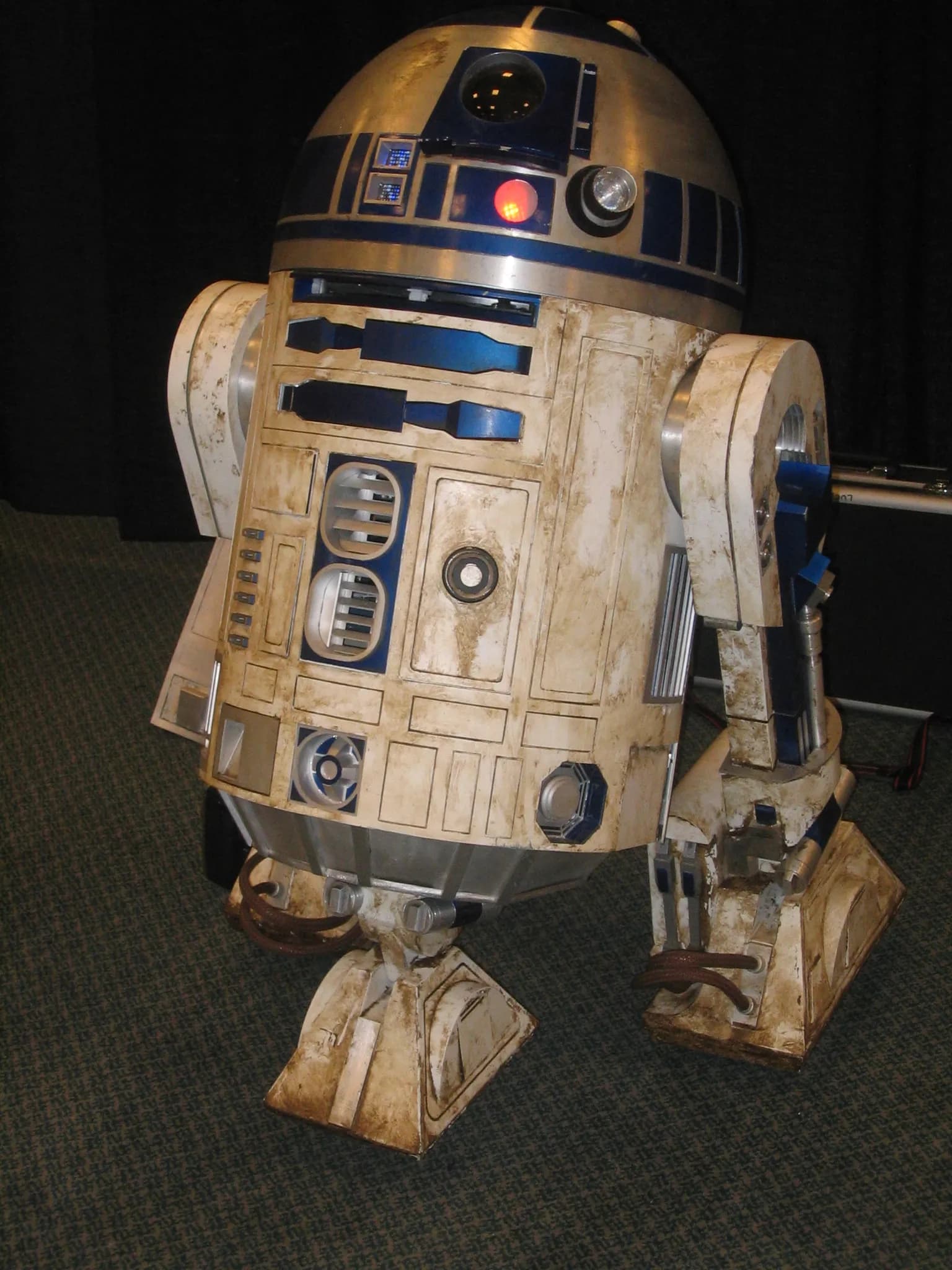
Stears created both R2-D2 and C-3PO, designing R2-D2 as the lovable, beeping droid and building C-3PO's metallic suit. He held the patent on R2-D2, a testament to his mechanical ingenuity in making the robot function on set.
He also developed the special effects for the Jedi Knights' lightsabers, creating the glowing blade effect that has captivated audiences for decades. Additionally, he built the Death Star with its threatening cannons and created Luke Skywalker's landspeeder. The landspeeder appeared to hover over the Tunisian desert; in reality, it was a four-wheeled vehicle with mirrors angled to reflect the sand, hiding the wheels from the camera.
Stears also created the garbage compactor scene, made the X-wing fighter fly, and built the Jawa's sandcrawler. For this work, he shared the 1977 Academy Award for Best Visual Effects with John Dykstra, Richard Edlund, Grant McCune, and Robert Blalack.
Later Career and Legacy
Stears continued working in Hollywood throughout the 1980s and 1990s. His credits include Outland (1981), The Bounty (1984), F/X: Murder by Illusion (1986), and The Mask of Zorro (1998).
He married Brenda Livy in 1960, and the couple had two daughters, Jacqueline and Janet. For most of his life, they lived at Welders House in Beaconsfield, Buckinghamshire, where Stears reared cattle and his wife ran Livy Borzoi Kennels. The couple sold the house to Ozzy Osbourne in 1993 and moved to Pacific Palisades, California.
Stears died on 28 April 1999 at UCLA Medical Center in Pacific Palisades, following a stroke. He was 64 years old.
Hillingdon's Cinematic Son
John Stears remains one of the most decorated figures to emerge from Hillingdon. His two Academy Awards for Thunderball and Star Wars place him in elite company, and his creations, from the ejector seat to R2-D2, have become permanent fixtures in popular culture.
The boy from Uxbridge who built model aeroplanes grew up to build the robots, spaceships, and spy cars that defined generations of cinema. His work demonstrated that practical effects, crafted with ingenuity and precision, could create movie magic that endures long after the films left the theatres.